Welcome to the SEAL community!
Social and emotional learning helps children and young people to:
‘… learn how to communicate their feelings, set themselves goals and work towards them, interact successfully with others, resolve conflicts peaceably, control their anger and negotiate their way through the many complex relationships in their lives today and tomorrow’.
This kind of learning underpins positive behaviour and attitudes to learning, personal development and mental health and wellbeing. It is at the heart of PSHE, relationships and health education.
Research shows it also helps raise attainment. Social and emotional learning is attracting increasing attention in schools. On this website you will find age-related teaching resources and whole school frameworks to support your work.
Many of them come from the national ‘Social and emotional Learning’ (SEAL) initiative. By registering with us (which is free, quick and easy), you can immediately find and download all of the national SEAL curriculum materials and teacher guidance. There’s a progression in learning objectives that can be used in any school, and training materials if you want to introduce or refresh a whole-school SEAL approach. Click on National Resources then click the Getting Started with SEAL tab.
If you would like regularly updated teaching resources, you can also join our SEAL Community. Set up and supported by leading experts in the field, the SEAL Community is a not-for-profit organisation which aims to promote and develop SEAL through sharing news, practice, resources and expertise. Joining costs £30 for individuals, £75 for schools/settings and £100 for local authorities or other multi-school organisations. Click here to join
News update

Empathy Week runs from 10th–14th March and bookings for some live in-person events are now open. Even if you’ve taken part before, you’ll need to register again to access the free resources ....

2-12 June 2025 will be a ten-day nationwide Empathy Festival , culminating in the annual Empathy Day itself on 12 June. The festival will feature ...

An analysis by the Children’s Society reveals the UK is at the bottom of European rankings in terms of life satisfaction across 27 nations.

Social and emotional learning (SEL) has hit a new record in the USA, where more than 8 out of 10 schools are implementing a SEL Curriculum and implementing SEL through regular check-ins with students, SEL integrated into academic content, and opportunities to promote student agency.

Sharing practice

One school in the US has turned a room into a brilliant social and emotional learning centre.
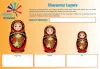
Eight schools in the Pentrehafod cluster in Swansea (seven primary, one secondary) did some great work with the organisation EmpathyLab.

RULER is a well-researched American SEL programme which uses four main tools: a class or school Charter, a Mood Meter, tools to m
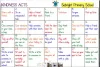
At Sebright Primary in Hackney, November is ‘kindness month’.
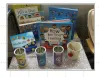
Beckley Ashley Irving, SENCO at Tetney Primary School, describes how her school promotes wellbeing.
Resource roundup


Practical tools
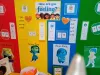


This is a good KS2/3 activity to help students develop a wide vocabulary for feelings. Make a space on the wall for a graph with two axes intersecting in the middle (like a + sign). Label the left-hand end UNPLEASANT and the right-hand end PLEASANT. Label the top INTENSE and the bottom MILD...

If your school can find £1200 we think a good investment would be two days of groupwork with the organisation Progressive Masculinity . Mike Nicholson and his team provide brilliant workshops for groups of boys – they suggest focusing on the older ones and the leaders/peer influencers first. Here is a sample of their activities/discussion questions.

Leah Kuypers, who devised the very popular Zones of Regulation, has some advice on using the Zones in the early years.
New research




Top resource
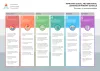
This is the Education Endowment Foundation's guidance report...

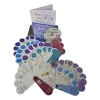
We really like this programme to teach young people aged 8 – 16 years to manage their own anxiety and worry. It helps them develop techniques to use on their own when they begin to feel worried; these are printed onto a fan to keep in their pocket or bag.