Home page

Welcome to the SEAL community!

Social and emotional learning helps children and young people to:

‘… learn how to communicate their feelings, set themselves goals and work towards them, interact successfully with others, resolve conflicts peaceably, control their anger and negotiate their way through the many complex relationships in their lives today and tomorrow’.

This kind of learning underpins positive behaviour and attitudes to learning, personal development and mental health and wellbeing. It is at the heart of PSHE, relationships and health education.

Research shows it also helps raise attainment. Social and emotional learning is attracting increasing attention in schools. On this website you will find age-related teaching resources and whole school frameworks to support your work.

Many of them come from the national ‘Social and emotional Learning’ (SEAL) initiative. By registering with us (which is free, quick and easy), you can immediately find and download all of the national SEAL curriculum materials and teacher guidance. There’s a progression in learning objectives that can be used in any school, and training materials if you want to introduce or refresh a whole-school SEAL approach. Click on National Resources  then click the Getting Started with SEAL tab.

If you would like regularly updated teaching resources, you can also join our SEAL Community. Set up and supported by leading experts in the field, the SEAL Community is a not-for-profit organisation which aims to promote and develop SEAL through sharing news, practice, resources and expertise. Joining costs £30 for individuals, £75 for schools/settings and £100 for local authorities or other multi-school organisations. Click here to join

News update

Mark your calendars for 9th - 13th March 2026, next year’s Empathy Week. The theme for 2026, ‘My Culture | Your Culture | Our Culture’, will give students a chance to explore the cultures that shape their identities, ...
Teenage mental health could be on the mend, as new research reveals a sharp decline in distress and signs of recovery from the pandemic’s impact. The report, Green Shoots and Grass Roots, draws on new polling by Public First of over 1,000 11- to 18-year-olds, using questions first asked in 2021 as a reference point.
A Public Health Wales survey of 130,000 secondary students has found that a fifth of teenage girls reported that their social media use was ‘problematic’ – twice the percentage found among boys.
The Royal Foundation Centre for Early Childhood has published a new framework aimed at improving awareness of and knowledge about social and emotional skills to inspire action across society, as part of The Princess of Wales’ mission to create a happier, healthier society.

Now in its fifth year, Now and Beyond is a national online festival for educational settings. It equips educators with the tools they need to facilitate difficult conversations on subjects that confront them every day, including resilience, self harm, and suicidal ideation.

Sharing practice

Ladybridge High School have created a distinctive approach to personal development, in which learners can elect to visit the ‘Human Library’ during weekly 30-minute personal development time...
How about a cross-curricular module on stress, taking it beyond just PSHE? This is what they’ve done at an American high school...
Anna Parker, an elementary school teacher at Lister Elementary School in Tacoma, Washington, asks students to rate problems on a scale from 1 to 5, and reflect on what sort of response each problem merits. Students discuss ...
More and more primaries are creating calm-down corners where children can independently take themselves when they need to self-regulate. But is it really possible to have spaces like these in secondary schools? This US school suggests it is ...

Y1 children at Pembroke Dock Community School read the fantastic text ‘The Invisible’ , by Tom Percival, which is great for work on empathy

Resource roundup

Belonging is a hot topic right now, since Ofsted in England made it one of the three principles underpinning the new inspection framework. Here we signpost Place2Be's  assemblies and lessons that focus on belonging.
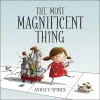
This is a great picture book to prompt discussion about how we can all 're-write our own story' if we want to be a bit different, or make changes in our life. ..
A nice all-age activity which aims to increase awareness of how emotions affect our goals. Students write one of their goals on the large paper (could be a personal goal or a team/shared goal). They then draw a feeling card at random ....
In this activity (KS2 and Y7) students create a paper ‘pizza’ of their goals in learning, physical, social and personal areas . They then annotate each goal with the ‘3 Ws’ - Who can help?, What do I need to do?, and When? ...
Here are some good reads to share on the theme of peristence and resilience. Make mistakes... try new ideas ... learn something new ..

Practical tools

When students are stressed or upset or having behaviour problems, try these really useful adult responses from Young Minds.
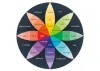
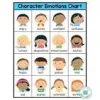
If your students have individual access to laptops,  have them Go to the Interactive version of Plutchik’s Wheel of Emotions. Ask them to click on three emotions they’ve felt this week. Then read the short blurbs to discover what each one might be trying to tell them — and how that insight could help guide their next steps.
Try the rose and thorn check-in, in which students share roses—something positive going on for them that day—and thorns, which are negative, or at least less than positive. Be sure to share yours too. Students can choose their level of vulnerability ...
Make check-ins fun and vary them by searching Google Images for ‘animal check-in mood boards’. We love this one, of Moo Deng the viral baby hippo. Which Moo Deng mood are you today?
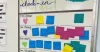
Students put a sticky note on the whiteboard or a poster that has different categories (such as “I’m doing great today” or “I’m struggling”), with the option to write more on the back of the note for the teacher’s eyes only.

New research

Whole-class mental health sessions in schools have a small but significant effect in reducing depression and anxiety symptoms, according to analysis led by researchers at UCL and Anna Freud.
A recent meta-analysis has investigated the effects of short intervention programs to boost teacher well-being. Mindfulness-based and positive psychology-based interventions had significantly larger effects than those focused on dealing with negative emotions.
A review of studies looking at the association between emotional awareness and regulation in adults and events earlier in their lives has found that lack of emotional literacy is more associated with childhood neglect than with physical or sexual abuse.
Lab research with adults has shown that cooperative behaviour can spread through social networks up to three degrees of separation. This means that when one person acts with empathy or intentionality, it can influence not only their immediate contacts but also their contacts' contacts, creating a ripple effect that fosters widespread behavioral change.
We learned some interesting things from a Tes interview with  Reinhard Pekrun, professor of psychology at the University of Essex, who has spent much of his career researching the interactions between emotions and achievement...

Top resource

An emotion wheel for the classroom

This is a great new book from Tina Rae, with activities to support children and young people who have lost someone they love


This is a nice book of poems to share with KS2 ...

In I Really Want to Shout by Simon Philip, a little girl uses witty and insightful rhyme to tell us about the things that make her angry...
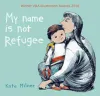
In this book by Kate Milner, a young boy discusses the journey he is about to make with his mother...