Home page

Welcome to the SEAL community!

Social and emotional learning helps children and young people to:

‘… learn how to communicate their feelings, set themselves goals and work towards them, interact successfully with others, resolve conflicts peaceably, control their anger and negotiate their way through the many complex relationships in their lives today and tomorrow’.

This kind of learning underpins positive behaviour and attitudes to learning, personal development and mental health and wellbeing. It is at the heart of PSHE, relationships and health education.

Research shows it also helps raise attainment. Social and emotional learning is attracting increasing attention in schools. On this website you will find age-related teaching resources and whole school frameworks to support your work.

Many of them come from the national ‘Social and emotional Learning’ (SEAL) initiative. By registering with us (which is free, quick and easy), you can immediately find and download all of the national SEAL curriculum materials and teacher guidance. There’s a progression in learning objectives that can be used in any school, and training materials if you want to introduce or refresh a whole-school SEAL approach. Click on National Resources  then click the Getting Started with SEAL tab.

If you would like regularly updated teaching resources, you can also join our SEAL Community. Set up and supported by leading experts in the field, the SEAL Community is a not-for-profit organisation which aims to promote and develop SEAL through sharing news, practice, resources and expertise. Joining costs £30 for individuals, £75 for schools/settings and £100 for local authorities or other multi-school organisations. Click here to join

News update
My Feelings: A Reading Adventure - take part in the National Literacy Trust's FREE summer term reading challenge for children aged 4 to 12, designed to nurture a love of reading and support emotional literacy.
An evaluation report of the 2021-5 behaviour hubs programme in England (involving successful schools supporting others) saw schools shifting towards restorative rather than zero-tolerance behaviour management policies...
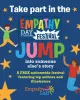
Don’t forget to sign up for seven days of fun empathy-building activity from 4-11th June, with Empathy Day on Thursday 11th June. The theme this year is ‘Jump into someone else’s story’...
We’ve unpicked the new Ofsted framework for English schools and looked at how it affects work on SEAL/SEL. Belonging and inclusion stand out, with PSHE/RSHE subject to curriculum inspection criteria. Read the full analysis ...
The National Literacy Trust surveyed over 100,000 children and young people aged 8 to 18 , as part of their Annual Literacy Survey, run since 2010. This time, children were asked about their social and emotional skills...

Sharing practice

Last year a group of London schools worked together on a project to tackle social, emotional and mental health needs. Each school gathered data, read up on research and developed a plan of action.
At The St Christopher School in Southend, helping pupils learn to regulate their emotions is very important – and also challenging, given the range of age, communication skills and cognitive ability the school caters for.
This is a brilliant story told by former science teacher (now local authority leader) Stephen Bush. Every year he received lots of data about his new students and their academic progress. But he didn’t know them as individuals. Then he read about the impact of developing a warm ‘socio-emotional climate’ in the classroom that fosters engagement and effort.
Whitefield Primary in Liverpool works hard to develop children’s ability to regulate strong emotions, using Leah Kuyper’s Zones of Regulation. Staff were aware, though, that when children went on to secondary school they often struggled to apply their primary school learning.
Whitefield Primary in Liverpool have used Leah Kuyper’s Zones of Regulation very successfully in classrooms for many years. Two years ago they received funding from the SHINE charity to develop and evaluate a project to share the Zones idea with families ...

Resource roundup

This month we’re launching the next instalment of our new interactive assemblies for primary SEAL, for Relationships and Changes ...
This activity from Young Minds is helpful for primary children to identify things they can do to release the pressures of revision and exams...
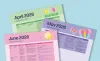
The Anna Freud centre have created a summer term mental health and wellbeing calendar, bringing key dates, themes and practical ideas together in one place...
The SEAL Community’s good friend Jenny Mosley is giving our readers a significant discount on her brilliant new books ...
Guided visualisations are a great way to help children regulate their emotions and manage stress. These visualisations from Jenny Mosley provide really useful scripts for primary whole-class, small group or one-to-one relaxation exercises ...

Practical tools

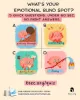
Take the emotional blindspot quiz ...
Inclusion is on every school’s mind at the moment, and we’ve put together some resources to help, for you and to share with your SENCO/ALENCO
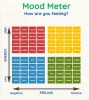
Take the class emotional temperature using a giant Mood Meter ...
Try having students (any age) use this journal, which has space and prompts for them to undertake a daily activity to help them reset for the new year. There are pages on swapping old habits for new ones, and visualising the person they want to become ...
We came across an interesting assessment tool for students with social, emotional and mental health needs. It is based on Dr. Bruce Perry's 6 Core Strengths for healthy child development - Attachment , Self-Regulation, Affiliation, Attunement, Tolerance and Respect  ...

New research

Something happens at six … did you know that profound psychological and neurological changes happen in middle childhood ...
Training maths teachers to develop empathy for their students has been shown to reduce suspensions...
Putting feelings into words (‘name it to tame it’) is something we teach students – but does it work? 
This 2025 study summarises 12 years of evidence and finds that 30 different SEL programmes showed clear academic benefits, with academic gains of 8 percentile points for longer programmes ...
Research has found that English teenagers have below average levels of socio-emotional skills and high inequalities in these domains relative to other OECD countries. In contrast, reading, maths and science skills are above the OECD average ...

Top resource

Shame was one emotion we didn’t explore in the SEAL programme. We should have! This great resource helps children explore the feeling and learn how to take off their shame armour bit by bit ...
SEAL was always designed so that learning could be across the curriculum, not just in PSHE lessons. And lo and behold, the wonderful National Literacy Trust have put together a brilliant new resource for reading, writing and oracy activities on the theme of New Beginnings.
The Keep your cool toolbox is a nice on-your-phone resource for foster carers and early years practitioners to help children self-regulate. It has short films showing different strategies and explaining their use. 
We think tthis image from the picture book Geoffrey gets the jitters by Nadia Shireen, would be great to use as a poster or on the whiteboard for work on worries. It shows six types of worries - the brood, the niggle, the spiral, the fret and so on. Use in conjunction with the book to help children identify the different types of worry in the story, and in their own experiences.

Realy useful emotion wheel for classroom work on identifying and naming different feelings . Use it as a poster or on the whiteboard.